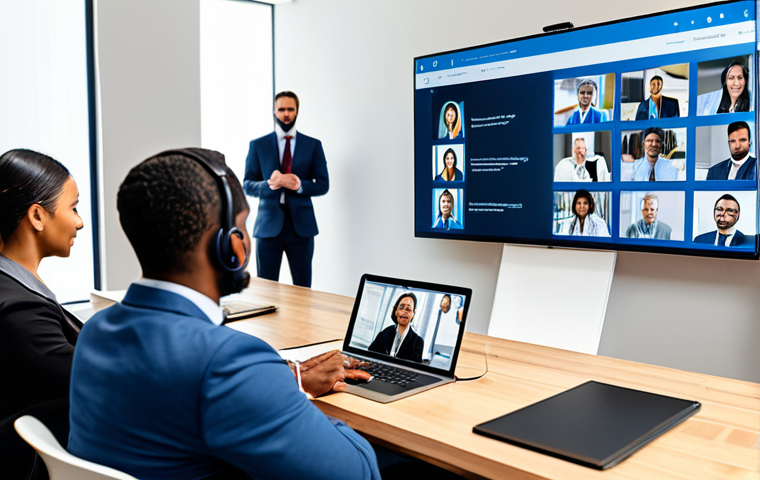
You know, it’s funny how often I’ve seen brilliant individual contributors get promoted into leadership roles, only to flounder. It’s not their fault; leading a team, especially in today’s rollercoaster environment, is a whole different ballgame.
I remember one time, trying to navigate a remote team through a major crisis – the communication breakdowns felt almost palpable, and it really hit home how unprepared we were for the nuances of leading without being in the same room.
The old playbooks just don’t cut it anymore, do they? We’re talking about fostering psychological safety in a hybrid setup, building true resilience, and developing leaders who can genuinely inspire, not just manage tasks.
The shift is palpable, from simply delegating to truly empowering and even collaborating with AI tools to enhance decision-making. Future-proofing our teams means investing deeply in those who guide them, preparing them for an unpredictable future where empathy and adaptability are paramount, not just buzzwords.
It’s a journey I’ve personally embarked on, and believe me, the landscape has changed dramatically.
It’s a journey I’ve personally embarked on, and believe me, the landscape has changed dramatically. Let’s dive deeper into this below.
Cultivating Empathy and Psychological Safety Remotely

Leading teams today, especially when you’re not physically together, demands a profound shift in how we approach human connection. I remember during that crisis I mentioned, the biggest barrier wasn’t technical; it was the quiet anxieties, the unspoken doubts that festered because people didn’t feel safe enough to voice them.
We had to actively create spaces, not just virtual meeting rooms, but *intentional* virtual spaces, where vulnerability was seen as a strength, not a weakness.
This meant me, as a leader, being open about my own challenges, admitting when I didn’t have all the answers, and celebrating failures as learning opportunities.
It’s about building a culture where a team member feels comfortable saying, “Hey, I’m really struggling with this,” without fear of judgment or professional repercussions.
That psychological safety isn’t some soft skill; it’s the bedrock of innovation and resilience, especially when you can’t pick up on non-verbal cues in person.
The Art of Active Listening in a Digital World
It’s easy to zone out on a video call, isn’t it? But truly effective remote leadership hinges on a heightened sense of active listening. I’ve found that it’s not just about hearing the words; it’s about paying attention to tone, identifying pauses, and noticing what *isn’t* being said.
For instance, I started dedicating a few minutes at the start of every team huddle to just check in, not about work, but about life. “How’s everyone *really* doing?” It sounds simple, but those moments often reveal underlying stresses that impact performance.
When someone shares, my immediate goal is to validate their feelings, even if I can’t solve their problem, and then ask clarifying questions that show I’m genuinely engaged.
This intentional presence builds trust and rapport far more effectively than any top-down directive ever could.
Empowering Vulnerability for Team Cohesion
One of the most powerful things I’ve learned about leading in complex environments is that vulnerability isn’t a sign of weakness; it’s a profound act of courage that invites connection.
Encouraging team members to share their struggles, their “aha!” moments, and even their personal goals, creates a fabric of shared humanity that transcends geographical distances.
I recall facilitating a virtual workshop where we all shared a personal “leadership challenge” we were currently facing. The sheer relief and camaraderie that erupted as people realized they weren’t alone was incredible.
It wasn’t about finding solutions instantly; it was about the shared experience of being human, striving, and sometimes falling short. This shared vulnerability fosters a stronger, more resilient team capable of navigating whatever storms come their way.
Fostering Adaptive Resilience in Unpredictable Times
The phrase “unprecedented times” feels like a broken record now, doesn’t it? But the reality is, unpredictability *is* the new normal. For leaders, this means moving beyond simply managing change to actively cultivating resilience within their teams.
It’s not about being tough; it’s about being flexible, resourceful, and capable of bouncing back, or even bouncing forward, when plans inevitably go awry.
I’ve seen teams crumble under pressure because they were too rigid, too attached to a single outcome. My personal approach shifted from trying to predict everything to preparing for anything.
This involved scenario planning, even for highly unlikely events, and encouraging a mindset where ambiguity is met with curiosity rather than fear.
Building Mental Fortitude, Not Just Work Ethic
It’s tempting to push teams harder when things get tough, but true resilience comes from equipping individuals with the mental fortitude to navigate stress and uncertainty.
This means actively promoting well-being, encouraging breaks, and recognizing the signs of burnout. I recently implemented a “no meetings Friday afternoon” rule for my team, something I initially thought would slow us down.
Instead, it provided much-needed space for deep work, reflection, and personal rejuvenation, ultimately boosting productivity and morale. It’s about understanding that human beings aren’t machines, and sustainable high performance comes from a balanced approach to work and life.
Empowering Decision-Making at the Edges
In a rapidly changing landscape, centralized decision-making often becomes a bottleneck. Resilience is amplified when decisions can be made swiftly and effectively at the lowest possible level.
This requires leaders to delegate not just tasks, but genuine authority. I learned this the hard way during a product launch that suddenly veered off course due to an unexpected market shift.
My initial instinct was to micromanage every pivot. However, when I stepped back and empowered the project leads to make on-the-spot adjustments, providing them with clear parameters and trust, the team adapted far more quickly than I could have directed.
This distributed leadership builds confidence, speed, and a collective sense of ownership.
Navigating the AI Frontier: Collaboration, Not Replacement
The rise of AI isn’t just a technological shift; it’s a fundamental redefinition of how we work and, critically, how we lead. It’s no longer about whether AI will take jobs, but how we can leverage it to enhance human capabilities and decision-making.
My personal journey with AI tools has been one of fascinating discovery. Initially, there was a natural apprehension – would it replace my strategic thinking?
What I’ve found is quite the opposite: it frees up cognitive load from repetitive tasks, allowing for deeper strategic analysis and more creative problem-solving.
Leaders need to guide their teams not to fear AI, but to understand its potential as a powerful collaborator.
Redefining Roles in an Augmented Workplace
The most significant impact of AI on leadership is the need to redefine roles and responsibilities. It’s about identifying which tasks AI can handle efficiently and then elevating human roles to focus on empathy, creativity, critical thinking, and complex problem-solving – areas where human intelligence still reigns supreme.
I recently led a project where an AI tool significantly streamlined our data analysis. This didn’t mean laying off our analysts; it meant they could now spend their time interpreting the *why* behind the data, developing more nuanced strategies, and presenting insights with a compelling human narrative, rather than just crunching numbers.
It’s about augmentation, not automation of jobs.
Ethical Considerations and Human Oversight
As leaders, we bear the responsibility of guiding our teams through the ethical maze of AI. This isn’t just about data privacy; it’s about ensuring fairness, preventing bias, and maintaining human accountability.
I’ve made it a point to educate my team not just on *how* to use AI tools, but on the potential pitfalls and biases inherent in algorithms. We have regular discussions about where AI adds value and where human judgment remains paramount.
It’s crucial to establish clear guidelines for when and how AI is used, always emphasizing that the ultimate decision-making power and moral compass remain firmly in human hands.
Mastering the Art of Distributed Communication
When your team is scattered across time zones, or even just across town working from home, effective communication transforms from an assumed skill into a finely tuned art.
The casual water cooler chats that once resolved issues instantly are gone. What I’ve learned, often through frustrating miscommunications, is that intentionality is key.
You can’t rely on osmosis; you have to design communication pathways that are clear, consistent, and considerate of different work styles and time zones.
This involves leveraging a blend of synchronous and asynchronous tools, ensuring everyone has access to critical information, and creating explicit norms around response times and preferred channels.
Crafting Clear Asynchronous Messages
One of the biggest shifts I’ve personally made is mastering asynchronous communication. Not everything needs a live meeting. In fact, most status updates or information sharing can be done through well-structured emails, detailed project management notes, or recorded video messages.
The trick is to be incredibly clear, concise, and anticipate questions. I now spend more time crafting a single, comprehensive message that can be consumed at the recipient’s convenience than I used to preparing for a spontaneous meeting.
It respects everyone’s time and allows for thoughtful responses rather than rushed ones.
Designing Intentional Virtual Connections
While asynchronous communication is powerful, it doesn’t replace the need for genuine human connection. Leaders must intentionally design opportunities for teams to connect beyond just work tasks.
I started implementing virtual “coffee breaks” where no work topics are allowed, or team-building games that foster a sense of camaraderie. It’s about recreating those serendipitous interactions that happen in an office environment, but in a structured virtual setting.
These moments, even if brief, are vital for maintaining team cohesion and preventing feelings of isolation, which can silently erode productivity and morale.
Strategic Investment in Continuous Learning and Development
In a world that’s constantly evolving, the most impactful thing a leader can do for their team, and for their organization’s future-proofing, is to champion continuous learning.
It’s no longer about a one-off training course; it’s about embedding a culture where learning is an ongoing, integrated part of daily work. I’ve personally seen the rapid obsolescence of skills that were once considered cutting-edge.
This means leaders need to identify emerging skill gaps, provide accessible resources, and actively encourage experimentation and upskilling, making it clear that professional development isn’t a luxury, but a necessity.
Building a Culture of Iteration and Feedback
Learning isn’t just about formal training; it’s deeply embedded in a culture that embraces iteration and constructive feedback. I’ve found that creating a safe space for experimentation, where “failed” attempts are reframed as valuable learning experiences, significantly accelerates skill development.
Regularly soliciting and providing candid, empathetic feedback, both upwards and downwards, is crucial. It’s about building a feedback loop that helps individuals and the team as a whole refine their approaches, adapt to new challenges, and grow continuously.
Leveraging AI for Personalized Learning Pathways
Interestingly, AI can play a pivotal role in personalizing learning and development. I’ve started exploring how AI-driven platforms can analyze individual skill gaps and recommend tailored learning pathways, or even curate relevant content.
This moves beyond a one-size-fits-all approach to development. Imagine an AI identifying that a team member needs to enhance their data visualization skills and then serving up a personalized course, article, or even a mentor suggestion.
It makes learning more efficient, more targeted, and ultimately, more impactful for individual growth and team capability.
Measuring Impact Beyond Traditional Metrics
In this new leadership paradigm, relying solely on traditional metrics like quarterly revenue or project completion rates is simply insufficient. The true impact of modern leadership – especially the kind focused on empathy, psychological safety, and resilience – is often felt in less tangible, yet profoundly important, ways.
This is something I’ve wrestled with; how do you quantify a stronger team culture or enhanced psychological safety? It requires a shift in perspective, embracing qualitative data alongside quantitative, and recognizing that long-term success is built on the health and adaptability of your people.
The Shift from Output to Well-being Indicators
While output remains important, great leaders are increasingly looking at indicators of well-being as critical success metrics. This includes things like employee engagement scores, retention rates, and even qualitative feedback on stress levels and work-life balance.
I’ve started conducting regular, anonymous pulse surveys focusing specifically on team morale and psychological safety, using the insights to proactively address issues before they escalate.
A happy, healthy team is a productive team, and investing in their well-being ultimately leads to sustained high performance.
Quantifying the Unquantifiable: Long-Term Value
It’s easy to dismiss investments in empathy or resilience as “soft” costs, but the long-term value is immense. Consider the cost of high turnover due to burnout, or the loss of innovation when employees are afraid to speak up.
These are tangible costs that are often hidden. By focusing on metrics like reduced absenteeism, increased peer-to-peer collaboration, and a higher willingness to tackle complex problems, leaders can start to quantify the seemingly unquantifiable.
It’s about demonstrating how a human-centric approach to leadership directly correlates with bottom-line results and sustainable growth.
| Aspect of Leadership | Traditional Approach (Old Playbook) | Modern Approach (New Paradigm) |
|---|---|---|
| Communication Style | Top-down directives, synchronous meetings, reliance on physical presence. | Intentional blend of synchronous/asynchronous, clear written communication, designed virtual interactions. |
| Team Resilience | Rigid planning, pushing through adversity, focus on individual grit. | Adaptive planning, fostering psychological safety, promoting well-being, distributed decision-making. |
| AI Integration | Fear of job displacement, limited adoption, AI as an IT function. | Leveraging AI as a collaborator, redefining human roles, ethical oversight, enhancing human potential. |
| Leadership Focus | Task management, project completion, efficiency above all. | Empowerment, empathy, fostering connection, continuous learning, holistic well-being. |
| Success Metrics | Revenue, deadlines, individual output. | Employee engagement, retention, team psychological safety, adaptability, long-term well-being. |
Future-Proofing Leadership Through Continuous Evolution
The most critical takeaway from navigating these tumultuous times is that leadership itself must be in a constant state of evolution. What worked even five years ago might be obsolete tomorrow.
It’s not about finding a single, perfect leadership style, but about cultivating an adaptable mindset, a deep commitment to learning, and an unwavering focus on the human element of your team.
The leaders who will truly thrive are those who embrace change not as a threat, but as an exciting opportunity to redefine what it means to inspire, empower, and guide their teams through uncharted waters.
I’ve found that my own leadership journey has become less about having all the answers and more about asking the right questions, fostering a growth mindset in myself and my team, and being comfortable with the beautiful messiness of human progress.
Embracing Discomfort as a Growth Catalyst
True growth, both personal and professional, rarely happens within our comfort zones. I’ve consciously started to seek out opportunities that push my boundaries, whether it’s learning a new technology or tackling a project where I don’t have all the answers.
As leaders, we need to model this willingness to embrace discomfort, to step into the unknown with curiosity rather than fear. When your team sees you grappling with new challenges, admitting mistakes, and learning in public, it gives them permission to do the same, fostering a culture of continuous development and resilience.
Building a Personal Board of Advisors
No leader can navigate the complexities of today’s world alone. I’ve found immense value in cultivating a “personal board of advisors” – a diverse group of mentors, peers, and even junior colleagues who can offer different perspectives, challenge my assumptions, and provide honest feedback.
These aren’t formal arrangements; they’re relationships built on trust and mutual respect. Having a sounding board, especially when dealing with ambiguous or emotionally charged situations, is invaluable.
It’s a reminder that leadership isn’t a solitary pursuit; it’s a deeply collaborative one, constantly informed by diverse insights.
Wrapping Up
As we navigate these ever-shifting landscapes, one truth remains clear: leadership is no longer about having all the answers, but about mastering the art of asking the right questions, fostering resilience, and deeply connecting with your team. This isn’t just theory; it’s a journey I’ve personally embarked on, filled with triumphs and valuable lessons. The future of leadership demands a human-centric approach, one that embraces vulnerability, champions continuous growth, and understands that true strength comes from adaptability and a shared sense of purpose. Let’s build that future, together.
Useful Information
1. Prioritize Psychological Safety: Actively create virtual spaces where team members feel comfortable sharing struggles and ideas without fear of judgment. This is the foundation of trust and innovation.
2. Master Asynchronous Communication: Not every interaction needs a live meeting. Craft clear, comprehensive written messages or recorded updates to respect diverse schedules and foster thoughtful responses.
3. Champion Well-being: Sustainable high performance comes from a balanced approach. Implement practices like “no-meeting blocks” or dedicated personal time to prevent burnout and boost morale.
4. Integrate AI Thoughtfully: View AI as a powerful collaborator, not a threat. Train your team to leverage AI for efficiency, redefine roles to focus on human strengths, and ensure ethical oversight.
5. Invest in Continuous Learning: Foster a culture where learning is an ongoing process. Provide resources, encourage experimentation, and leverage tools (including AI) for personalized skill development to future-proof your team.
Key Takeaways
Modern leadership transcends traditional metrics, emphasizing empathy, psychological safety, and distributed decision-making. It’s about building resilient teams capable of navigating uncertainty, thoughtfully integrating AI to augment human capabilities, and mastering intentional communication across various channels. The core of future-proof leadership lies in fostering continuous learning and prioritizing the holistic well-being of your people for sustainable success.
Frequently Asked Questions (FAQ) 📖
Q: You mentioned the struggle of individual contributors promoted to leadership. What’s the biggest disconnect, in your experience, that causes this flounder?
A: Oh, this one hits close to home because I’ve seen it play out so many times, and frankly, I’ve had my own stumbles along the way. The biggest disconnect, hands down, is the fundamental shift from being a master of your craft – delivering amazing work yourself – to becoming an enabler of others.
It’s no longer about your output; it’s about creating an environment where their output flourishes. I remember a truly brilliant engineer, a coding wizard, who got promoted to lead a team.
He just couldn’t wrap his head around why his team wasn’t as fast or as “perfect” as he was. He kept trying to fix their code directly instead of coaching them or removing blockers.
The frustration was mutual, and it taught me that leadership is less about being the smartest person in the room and more about being the most supportive, the most empathetic, and sometimes, just the best listener.
It’s an entirely different muscle, one many don’t realize they need to build until they’re already in the role.
Q: The “old playbooks don’t cut it anymore” is a powerful statement. What specific “new” skills or approaches are non-negotiable for leaders navigating today’s hybrid, unpredictable landscape?
A: Absolutely, those old playbooks feel like relics, don’t they? If I had to pick just a couple, the absolute non-negotiables are fostering psychological safety and cultivating genuine adaptability.
It sounds a bit like buzzword bingo, I know, but let me tell you why it’s not. In a hybrid world, where you might not see someone’s body language or pick up on their quiet struggle, you have to intentionally create spaces where people feel safe to speak up, to fail, to ask for help without fear of judgment.
I’ve been in meetings where the virtual silence was deafening, and it took a conscious effort – like dedicated “check-in” times that weren’t about tasks, or even just sharing my own recent screw-ups – to break that barrier.
And adaptability? Forget rigid five-year plans. It’s about being able to pivot on a dime, not just strategically, but emotionally.
Leaders need to model comfort with ambiguity and help their teams navigate constant change, because let’s be real, the only constant lately is… well, constant change!
It’s less about having all the answers and more about guiding the collaborative search for them.
Q: You mentioned “future-proofing our teams.” How does an organization actually invest deeply in leaders to prepare them for such an unpredictable future, especially considering the role of
A: I? A3: This is where the rubber meets the road, and honestly, it’s not about sending everyone to a generic two-day seminar anymore. Future-proofing, for me, starts with a deeply personalized investment in leadership development, not just training.
It’s about building a robust internal coaching culture, where senior leaders mentor rising stars, and external executive coaching isn’t just for the C-suite.
We’re talking about putting real money and time into tailored programs that focus on emotional intelligence, conflict resolution, and strategic foresight, not just project management.
And AI? It’s a game-changer, but not in the way many think. We’re not “replacing” leaders with AI; we’re empowering them to make smarter, faster decisions.
I’ve personally experimented with using AI tools to analyze market trends or even draft initial strategy documents, freeing me up to focus on the truly human aspects – like inspiring my team, building relationships, and navigating the nuances of human dynamics.
The investment is in teaching leaders how to leverage these tools to amplify their own human capabilities, to become more empathetic and adaptable, not less.
It’s about cultivating a mindset where technology is a partner, not a threat, in navigating the unknown.
📚 References
Wikipedia Encyclopedia
구글 검색 결과
구글 검색 결과
구글 검색 결과
구글 검색 결과
구글 검색 결과